When Intelligence Becomes a Utility Part 1
The Boundaries We Thought We Knew
By Harpreet Singh Gandhi · PRUNE Editorial·6–7 min read
1. The astonishing progress of AI
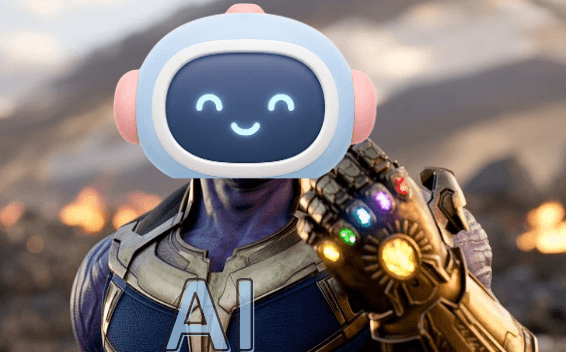
For most of human history, intelligence was something we developed within ourselves. We learned, observed, experimented, made mistakes, and gradually built an understanding of the world. Knowledge accumulated across generations, and progress often required years of effort from people who dedicated their lives to a particular field.
Then, within a remarkably short period, we began building machines that could participate in this process.
At first, artificial intelligence seemed like a useful tool. It could answer questions, recognise patterns, translate languages, and automate repetitive tasks. Its limitations were apparent, and its role seemed relatively straightforward: it would help us do things we already knew how to do.
But the boundary began to move.
In May 2026, an internal OpenAI model disproved a longstanding conjecture connected to the Erdős unit-distance problem, a question that mathematicians had studied since 1946. What made the result particularly striking was not simply the difficulty of the problem. OpenAI reported that the proof came from a general-purpose reasoning model, not a system specially built to search for that particular proof, and mathematicians outside the company checked the result. In July, mathematician Levent Alpöge credited Anthropic's Claude Fable 5 with producing a counterexample to the Jacobian conjecture, a problem that had remained open since 1939. In another development, Google DeepMind's AlphaProof Nexus reportedly solved nine open Erdős problems out of 353 attempted, including two that had remained unresolved for 56 years.
The change is not limited to mathematics. In cybersecurity, AI is beginning to help uncover weaknesses that human experts have struggled to find. In August 2026, researchers working with AI tools discovered the critical PHP2Shell vulnerabilities in PHP, a programming language behind a large share of the web. They were disclosed publicly on 20 October 2026, weeks later, and rated 9.2 out of 10 in severity on the CVSS v4.0 scale. In May 2026, researchers reportedly used Anthropic's Claude Mythos Preview to develop an exploit that bypassed security protections on Apple's M5-powered Mac systems in just five days.
In biology, AI is beginning to help scientists design molecules rather than simply study those that already exist. In October 2026, researchers introduced Pinal, an AI model that generated candidate proteins from descriptions written in ordinary language. In materials science, Google DeepMind's GNoME system predicted 2.2 million new crystal structures, including approximately 380,000 predicted to be stable and potentially useful for future technologies such as batteries and computer chips.
These achievements are not identical, and they are not equally settled. Some come from the companies that built the systems, some are still being examined by independent experts, and a predicted protein or crystal is not the same as one confirmed in a laboratory. Yet they share something important: AI is beginning to participate in tasks that once depended almost entirely on specialised human expertise.
And this all didn’t happen overnight. It is the result of decades of progress building upon itself. From the invention of transistors and integrated circuits to the rise of powerful GPUs, deep learning, and neural networks, each breakthrough expanded what computers could achieve. The availability of vast amounts of training data, followed by the development of the Transformer architecture, accelerated this progress further, enabling models to learn complex patterns across enormous amounts of information. What began as a series of separate advances gradually converged into the systems we see today.
We are no longer building machines merely to follow instructions or perform tasks whose answers we already know. We are building systems that can explore unfamiliar problems, develop possible solutions, and sometimes contribute to discoveries that extend beyond what we previously knew.
But there is a distinction we need to explore: When a machine can produce something new, does that mean it understands what it is doing?
2. Intelligence, understanding, and consciousness
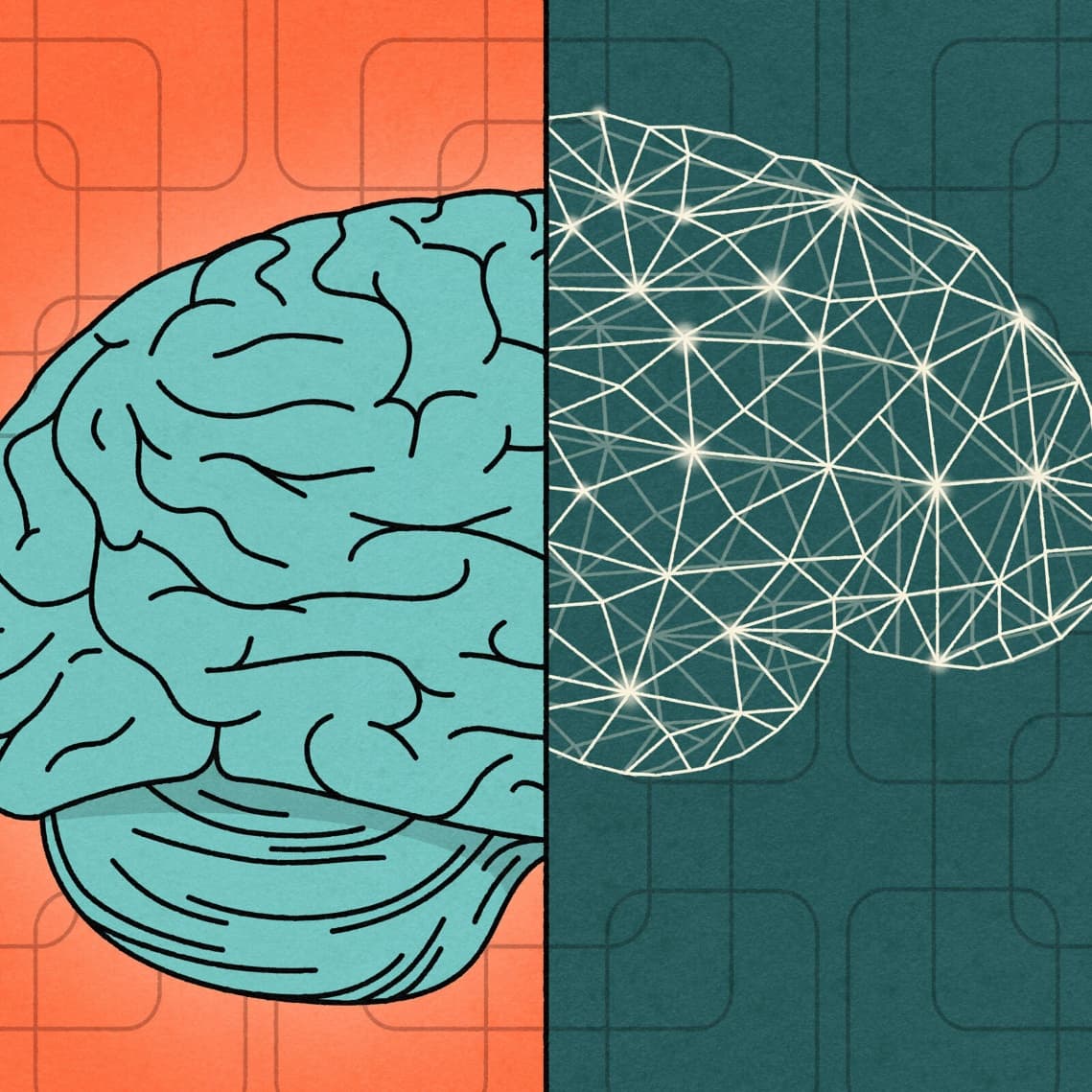
Before we go any further, we need to distinguish three concepts that are often treated as though they mean the same thing: intelligence, understanding, and consciousness.
Intelligence concerns the ability to learn, reason, solve problems, recognise patterns, and accomplish tasks. We can measure performance, compare results, and evaluate how effectively a system handles increasingly difficult tasks.
Understanding is a more complicated question. It concerns how a system grasps relationships, concepts, assumptions, and implications. A system might produce a correct answer, but how far does that answer reflect a robust grasp of the problem? Can it recognise when its assumptions are wrong, apply its knowledge in unfamiliar situations, and explain the limits of its conclusions? These questions cannot always be settled by checking whether a single answer is correct.
And then there is consciousness, perhaps the most difficult question of all.
Consciousness concerns subjective experience. Is there something it feels like to be a particular system? Does it experience anything at all, or does it process information and generate responses without subjective experience?
These three concepts are connected, but they are not interchangeable.
Imagine asking an AI system to solve a difficult mathematical problem. It arrives at the correct answer, explains each step, identifies an alternative approach, and successfully applies the same principle to a completely different problem. From the outside, its behaviour looks remarkably similar to that of a person who understands mathematics.
But now consider three different questions. Does its ability to solve the problem demonstrate intelligence? Does its ability to recognise mistakes, adapt its reasoning, and explain why a particular approach works demonstrate understanding? And even if it can do all these things, does it actually experience anything while working through the problem? Does it feel curiosity when exploring a difficult question or satisfaction when reaching a solution?
These distinctions matter because the debate about AI often moves too quickly between two extremes. One side may treat impressive performance as proof that a machine thinks and experiences the world just as we do. The other may dismiss genuine achievements because the system does not think in the same way a human does.
Neither conclusion follows automatically. Solving problems does not establish consciousness. Equally, uncertainty about consciousness does not erase what these systems have demonstrably done.
We need to examine what AI systems can do, what their performance tells us, and what remains unknown about the nature of their intelligence.
But even if we cannot fully answer these questions today, one possibility deserves our attention: what happens if the capabilities of these systems continue to expand beyond our own?
3. AGI, superintelligence, and the changing boundaries
Two terms frequently appear in discussions about how far artificial intelligence could eventually go: AGI and ASI.
Artificial General Intelligence (AGI) generally refers to an AI system capable of learning, reasoning, and applying knowledge across a broad range of tasks at a level comparable to human intelligence. Unlike today's systems, which can demonstrate exceptional performance in particular areas while remaining limited in others, AGI would be expected to handle unfamiliar problems, transfer knowledge between different fields, and adapt to situations it has not specifically encountered before.
However, there is no universally accepted definition of AGI. Researchers disagree about what capabilities such a system must possess, how much autonomy it should have, and how we would reliably determine whether it has achieved general intelligence.
Then there is Artificial Superintelligence (ASI), a hypothetical stage in which an artificial system would surpass human intellectual capabilities across virtually all relevant cognitive domains, outperforming the best human minds in scientific research, mathematics, engineering, strategic reasoning, and many other disciplines.
These terms describe different levels of capability, not inevitable stages of technological progress. We should not assume that progress will follow a predictable schedule, or that every new model brings us proportionally closer to either milestone.
Nevertheless, the possibilities deserve serious consideration.
Imagine a system capable of learning unfamiliar disciplines, conducting independent research, developing scientific theories, designing complex technologies, and solving problems across multiple fields. Further it could also improve the methods it uses to perform these tasks, collaborate with other intelligent systems, and contribute to the development of increasingly capable successors.
Some of these abilities already exist in limited forms. Others remain uncertain or hypothetical.
There is, however, an important distinction we must remember. Surpassing humans intellectually does not necessarily mean surpassing every aspect of being human. We are not defined by intelligence alone. Our physical abilities, emotional lives, relationships, subjective experiences, and ways of interacting with the world are all part of what makes us human.
Yet suppose artificial systems eventually surpass human performance across almost every intellectual domain. Suppose they can discover solutions faster, explore possibilities at a scale we cannot match, and contribute to scientific progress beyond the limits of any individual human mind.
Such a development would challenge something we have taken for granted for centuries: that human intelligence represents the highest level of intellectual capability we know.
And perhaps the important question is not simply how intelligent machines might become, but what their growing capabilities would mean for the humans who created them.
4. What does it mean to be human?
We have spent centuries developing our understanding of intelligence. Now, we are creating systems that challenge some of our assumptions about it.
For most of history, intelligence had to be developed and exercised by the person who needed it. If you wanted to solve a hard problem, you had to learn how, or find someone who already had. Expertise was scarce, and that scarcity was part of what made it valuable.
Now something is changing. Certain forms of intelligence are starting to look less like something we must build within ourselves and more like something we can draw on when we need it, the way we draw on electricity or computing power. Switch it on, use what you need, switch it off. Intelligence, increasingly, is becoming a utility.
And like any utility, it raises questions: who provides it, who controls it, who sets the price, and what happens to those who depend on it when it becomes unavailable?
We do not know how far this process will go, whether future machines will surpass us across almost every intellectual domain, or whether our understanding of intelligence, understanding, and consciousness will need to change along the way.
But perhaps the most unsettling question is not what machines will eventually become.
If intelligence is no longer what separates us from machines, then what does?
To be continued...
Coming soon: Part II — What makes us Human?

Engineering student, researcher, inventor, and the creator of Prune. Building systems to cut through AI noise and make genuine utility easier to discover.